Online Bingo UK: How Games and Tickets Work
 Available in GB
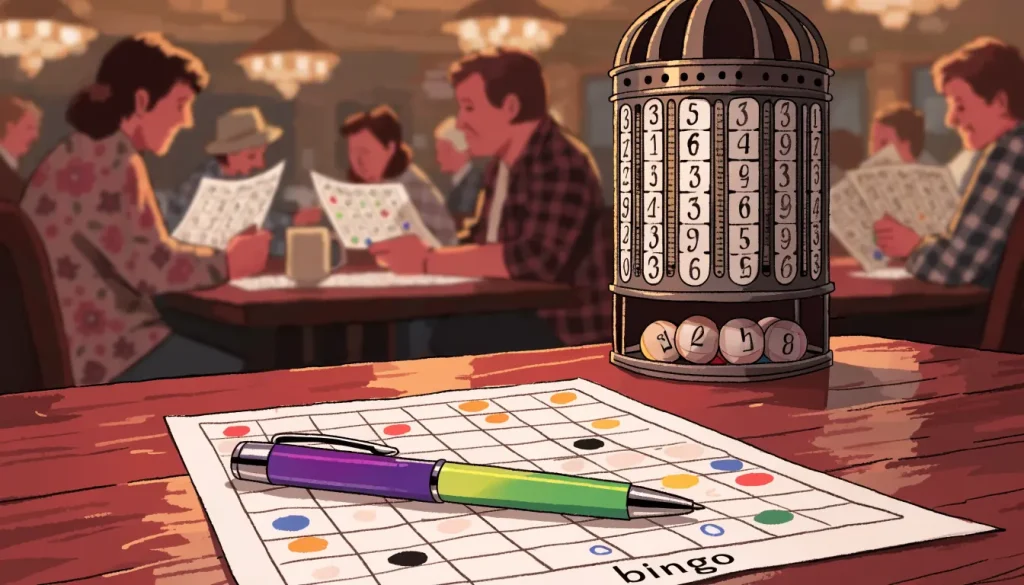
Each round pairs a ticket layout with called numbers and a rule that determines which completed pattern qualifies for a prize.
Table of Contents
- How Online Bingo Rounds Work
- How Bingo and Slot Games Fit Together
- What a UK Bingo Site with Slots Must Meet
- Ticket Prices, Stakes and Prize Scale
- Free Tickets and Bonus Conditions
- Bingo Room Timing and Ticket Limits
- Where You Can Play and How Withdrawals Work
- Mobile Play and Account Safety Controls
- What “Bingo Slot Machine” Means Online
- Can You Play Slots at an Online Bingo Site?
- Games
How Online Bingo Rounds Work
An online bingo round is built around three parts: a ticket, a sequence of drawn numbers and a rule that defines a win. You buy a ticket for a particular game, then follow the draw as numbers are called. When a called number appears on your ticket, you mark it off. The aim is to complete the required pattern before other players do.
The ticket is the part that makes each format distinct. Its layout determines how numbers are arranged and, together with the room’s rules, which completed pattern counts as a prize. A bingo game online is therefore not just a screen full of numbers: you need to know what the ticket looks like and what the round recognises as a win.
In an online room, the draw and ticket are presented on screen. The system can mark a matching number for you, or you may be able to mark it yourself, depending on the game interface. Either way, the underlying task stays the same: keep track of the numbers called and compare them with the numbers on your ticket. A completed pattern is what makes a ticket eligible for a prize; having several marked numbers is not enough if they do not form the pattern required by that round.
Choosing an online bingo site in the UK for 2026 means checking the details that matter to you before you play. These listings include payout timing as one point to consider.
1. NightLuck
Payout speed: 1-3 business days NightLuck lists a payout speed of 1–3 business days, giving you a stated timeframe to consider.
2. Britsino
Payout speed: 1-3 business days Britsino lists payouts as taking 1–3 business days, so you have a timeframe to bear in mind.
3. EvoSpin
Payout speed: 1-3 business days EvoSpin has a stated payout speed of 1–3 business days, a practical detail for you to review.
4. Dieselwin
Payout speed: 1-3 business days Dieselwin lists a payout timeframe of 1–3 business days for you to consider.
5. BeOnBet
Payout speed: 1-3 business days BeOnBet states that payouts take 1–3 business days, giving you a clear timing detail.
6. SlotoSport
Payout speed: 1-3 business days SlotoSport lists a payout speed of 1–3 business days, which you can factor into your choice.
7. Zombillion
Payout speed: 1-3 business days Zombillion gives a payout timeframe of 1–3 business days for you to take into account.
8. Chanze
Payout speed: 1-3 business days Chanze lists payouts at 1–3 business days, a useful timing detail for you to note.
9. Jetsetspins
Payout speed: 1-3 business days Jetsetspins states a payout speed of 1–3 business days, so you can consider its listed timing.
10. NightWin
Payout speed: 1-3 business days NightWin lists a payout timeframe of 1–3 business days for you to review.
The room’s rules matter because one game may award a prize for completing a line, while another may require a shape or a full card. Before a round begins, check which format is being played and what pattern the game counts. This lets you understand what you are watching as the draw progresses, rather than treating every bingo screen as if it worked in the same way.
90-ball bingo
In 90-ball bingo, each ticket has a 9×3 layout. The format uses three possible stages of completion: one line, two lines and a full house. A line prize is awarded when the required line on a ticket is complete; the next prize depends on completing two lines, and the full-house prize requires all the ticket’s numbers to be matched.
That sequence gives the round a clear progression. A ticket can reach the first winning stage without being complete, so the draw may continue after a line has been claimed. The later stages depend on further numbers being called and matched. If you are following several tickets, the same call can advance one ticket towards a line and another towards a full house, depending on their layouts.
90-ball bingo is often the format people have in mind when they picture a conventional bingo ticket, but the important point is the rule structure: the ticket is arranged in three rows, and prizes are tied to line completion and then to the full ticket.
80-ball bingo
80-ball bingo uses an 8×4 grid. Instead of relying on the line-and-full-house sequence associated with 90-ball play, the game can set a coloured pattern for players to complete. Examples include four corners, a letter shape or a full card.
American Roulette at UK Online Casinos: Odds and Play
The target pattern changes how you read the ticket. For four corners, the relevant positions are the ones at the grid’s corners; for a letter shape, the marked numbers must trace the specified form. A full-card target requires completing the card rather than matching a smaller shape. The exact pattern for a round is defined by its rules, so the ticket layout alone does not tell you which arrangement is required.
This means two rounds using the same 80-ball grid can feel different if they set different targets. As numbers are called, you are checking whether the marked positions match the active pattern, not simply counting how many numbers have been marked. The coloured display helps show which parts of the grid matter for that particular win condition.
75-ball bingo
A 75-ball ticket has a 5×5 grid, and the winning condition is based on a pattern. Possible targets include a cross, an X, a diamond, a letter T or a picture frame. Each shape uses a different arrangement of positions, so a ticket with many marked numbers may still be short of a win if the required pattern is incomplete.
The pattern is the key to following this format. For instance, completing a cross requires the relevant marks to form that shape; marks scattered across the grid do not count simply because there are many of them. The game identifies the target for the round, and the draw determines whether a ticket completes it.
90-Ball Bingo
Uses a 9×3 layout. Prizes are awarded for completing one line, two lines, and a full house.
80-Ball Bingo
Uses an 8×4 grid. Wins are based on coloured patterns such as four corners, letter shapes, or a full card.
75-Ball Bingo
Uses a 5×5 grid. Winning conditions are patterns like a cross, X, diamond, letter T, or picture frame.
Across all three formats, the basic mechanism remains stable: players buy tickets, numbers are drawn, and a win depends on completing the specified pattern before other players. What changes is the ticket’s layout and the shape or stage the game treats as a winning result. When you enter an online bingo room, identify those two details first. That is enough to tell you what each call can do and why one ticket may be closer to a prize than another.
How Bingo and Slot Games Fit Together
A bingo room and a slot game can appear within the same online service, but they remain separate games. The bingo round is based on tickets and a number draw: your ticket is checked against the numbers called, and the result depends on whether its pattern is completed in time. A slot game uses its own play cycle and rules. Having both available in one place does not make the slot part of the bingo draw.
The connection between them is usually an offer or a shared interface, rather than a shared outcome. For example, a specialist review describes rooms where buying a bingo ticket is linked to a free slot spin. In that arrangement, the ticket purchase is the condition for receiving the spin; it does not give the slot symbols any role in the bingo result. The bingo ticket is still judged by the draw, while the spin is settled separately under the slot game’s rules.
Online Casinos Without ID in the UK: What to Know
That distinction matters when you are deciding what a purchase gives you. A ticket gives you entry into a bingo round. A linked spin, if an offer provides one, is an additional opportunity to play a different game; it is not another bingo ticket, an extra chance at the bingo pattern, or a change to the draw. The two outcomes should therefore be read separately. A bingo result does not determine a slot result, and the slot result does not alter which numbers have been drawn.
Some services place bingo and slots close together in their menus, or present a slot offer alongside a room. That can make the products feel like one combined activity, but the relevant question is what each action actually enters you into. Selecting a room and buying a ticket concerns the bingo round. Starting a slot concerns the slot game. If an offer connects those actions, its terms describe the link; the game mechanics remain distinct.
This is also why the word “bonus” needs careful interpretation. A free spin may be attached to a ticket purchase, but it is still a slot play rather than a bingo prize. Its value does not change the ticket’s face value or the pattern needed to win. Likewise, a bingo prize is not automatically a slot-game return. Keeping those amounts and outcomes conceptually separate makes it easier to understand what you are paying for and what is being offered in addition.
Return to player, often shortened to RTP, is a way of describing a game’s theoretical return across repeated play. It is not a promise about what one session will return, and it does not predict whether a particular spin or bingo ticket will win. The available comparison is that side games often have lower RTP percentages than the bingo room itself. This is a general comparison, not a guarantee about every slot, every room, or every individual result.
Return to player (RTP) is a theoretical return across repeated play, not a guarantee for any single session, spin, or ticket.
The practical implication is that a slot spin attached to bingo should not be treated as equivalent to extra bingo value. It belongs to a different game, with a separate result and its own theoretical return. If you are comparing what an offer adds, first identify whether it grants bingo entry, slot play, or both. Then consider each part on its own rather than assuming that an attractive link between them improves the odds of the bingo round.
A clear mental model is to imagine two independent tracks. On one track, tickets enter a bingo draw and are assessed against the called numbers. On the other, a slot game produces its own outcome when played. A promotion can connect the tracks by making one action eligible for something on the other, but that connection does not merge their rules. The bingo round continues to be settled as bingo, and the slot remains a side game.
So, when you play bingo and slots online, look for the boundary between the room and any additional game. The ticket purchase and the draw define the bingo activity; a linked spin, where offered, is a separate slot activity. Understanding that boundary helps you distinguish an extra feature from part of the core round, and it prevents the presence of slots from obscuring how bingo outcomes are determined.
What a UK Bingo Site with Slots Must Meet
Online bingo is legal in the United Kingdom, but an operator cannot offer it to UK players simply by making a website available. It must hold a UK Gambling Commission (UKGC) licence for the relevant services. That requirement applies whether the operator is based in Britain or elsewhere: a business selling remote gambling to consumers in Great Britain must be licensed to do so.
European Roulette Online in the UK: Rules and Odds
The licence is a condition of operating, not a quality badge that ranks one site above another. It places the operator within a regulatory system that sets standards for fairness, anti-money laundering and responsible gambling. These standards apply to the business behind the games, including where bingo and slot play are offered through the same account.
Fairness and oversight
Fairness is part of the licensing requirement. The operator must meet UKGC standards for the gambling services it offers; a site’s own claims about its games do not replace regulatory oversight. The licence also gives the regulator a basis for supervising the operator’s conduct and requiring it to meet its obligations.
For you, the practical check is the UKGC licence number. It should be displayed prominently in the site footer. You can verify that number against the Commission’s public register before depositing. If a gambling site does not prominently display its UKGC licence number in the footer, close the tab rather than treating the missing information as a minor design issue.
The distinction matters when a business is based outside the UK. Its location does not remove the licensing requirement if it is offering remote gambling to consumers in Great Britain. A foreign address, familiar brand or professional-looking website is not a substitute for a UKGC licence.
Anti-money laundering obligations
Licensed operators must also meet anti-money laundering standards. This is a business compliance requirement: the operator must take steps to prevent its services from being used to handle criminal funds. The requirement forms part of the conditions for offering gambling legally, rather than being an optional policy that a site can choose to apply.
Licensing Check
If a gambling site does not prominently display its UKGC licence number in the footer, close the tab immediately.
Those controls sit alongside the operator’s wider regulatory duties. They do not change how a bingo draw works, but they are part of the framework that governs the company running the game. A site offering both bingo and slots remains responsible for meeting the relevant standards across its gambling services.
Responsible gambling and player protections
Responsible gambling is another area covered by UKGC licensing requirements. Licensed operators must provide responsible gambling tools, including self-exclusion. They must also offer account-level financial limit controls and prompt new customers to set a financial limit before making a first deposit. These are operator obligations, not optional extras that depend on whether a site promotes itself as a bingo specialist.
The rules also include age and identity safeguards. Players must be at least 18, and an operator must verify a customer’s age before allowing a deposit. UKGC licensees must verify players’ identities; the process commonly involves providing photo identification and proof of address. These checks support the operator’s legal duties and are not evidence that an account has been singled out for unusual treatment.
If a dispute arises, a UKGC-licensed operator must provide an internal complaints process and access to an approved Alternative Dispute Resolution service. This gives you a defined route for raising a complaint rather than leaving the matter solely to informal exchanges with the site.
When assessing online bingo sites that also offer slots, treat licensing as the baseline for legal operation, not as a promise of a particular outcome or a guarantee that every promotion suits you. Confirm the UKGC licence number on the public register and check that the protections described are accessible in the account. The same regulatory framework applies whether you reach the games on a computer or a mobile device; the operator’s licensing obligations do not depend on the screen you use.
Live Casino Lightning Roulette in the UK: A Guide
Ticket Prices, Stakes and Prize Scale
The price shown beside a bingo ticket is the amount charged for entering that game with that ticket. It is separate from the value of any prize advertised for the room. Online rooms span a wide range: low-stakes games can charge from 1p to 5p per ticket, while premium games may cost £1 or more. Another way operators describe the range is from 2p penny-room tickets to £5 or more in high-stakes games. These are broad price bands, not a promise that every room offers every price.
The useful comparison is the cost of entry against the prize structure, not the ticket price in isolation. A cheaper ticket limits the amount committed to that entry, while a more expensive ticket costs more to buy. Neither price by itself tells you how likely your ticket is to win. The number of tickets you buy also affects your total spend: each additional ticket adds its own cost, so a low unit price can still add up if you purchase many.
Prize values can differ between rooms, and the advertised top prize is not the same as a guaranteed return on your ticket. A full-house prize is awarded only if the relevant winning condition is met; paying more does not make that outcome certain. Before entering, check which prize applies to the game, what conditions trigger it and whether the amount displayed is a fixed prize or a jackpot. The ticket price tells you what you pay to participate, not what you will receive.
Do
- Compare ticket cost and prize information together
- Calculate total entry cost by multiplying ticket price by number of tickets
- Set a spending amount you are comfortable losing
Don’t
- Treat a high ticket price as a guarantee of a larger prize
- Assume a low-priced ticket is automatically better value
- Treat a displayed prize as money already earned
A specialist review describes one possible contrast: a 1p game might offer a £10 full-house prize, whereas a £1 game could advertise a jackpot in the hundreds or thousands. Treat those figures as an illustration reported by that review, not as a standard price-to-prize relationship across UK bingo rooms. A particular room’s prize can change, and a higher ticket price does not establish that its prize is proportionally larger or that it offers better value.
To compare two games, read the ticket cost and the prize information together. If a room lets you select several tickets, calculate the total entry cost before confirming the purchase: multiply the displayed price per ticket by the number selected. Then consider whether the prize you are interested in is available for the pattern or outcome described in that room. This keeps the comparison grounded in the actual game rather than a headline figure.
A large jackpot can make a premium room look attractive, but it does not remove the cost of each ticket or turn the prize into a predictable return. Likewise, a low-priced ticket is not automatically better value if the prize structure does not suit what you want to play. Your decision should start with a spending amount you are comfortable losing, then compare eligible rooms within it. Do not treat a displayed prize as money you have already earned.
When browsing bingo rooms that also appear alongside slot games, keep the costs separate. This section concerns bingo tickets and bingo prizes: the price of a bingo entry does not describe the cost or potential return of a separate game. Compare the bingo ticket price with the bingo prize terms, and assess any other game on its own terms. That distinction prevents a combined offer or shared lobby from obscuring what each part of the play costs.
Mines Casino Game UK: Licensing, Demos and Odds
Free Tickets and Bonus Conditions
A new-player offer can combine a cash bonus with free bingo tickets, but the headline value does not tell you what can be withdrawn. A specialist review describes a package containing a £10 cash bonus and 30 free tickets. Treat that as a reported offer, not a standard available at every site: promotions change, and the terms attached to each one determine how its parts work.
Start with ticket eligibility. A free ticket may be valid only in named rooms or for a particular ball type, so it might not cover every game in the lobby. Its expiry also matters. A specialist review reports a 24-hour expiry for some free tickets; other terms may differ. Check when the clock starts, which room qualifies, and whether you need to claim or use the ticket before it expires. An unused ticket has no cash value simply because it appeared in your account.
The ticket itself cannot be withdrawn. If it produces a win, the operator credits that amount as cash, but the cash may remain subject to a wagering requirement. That is a separate condition from the ticket’s face value: the face value describes the promotional benefit, while wagering rules determine what must happen before eligible funds can be withdrawn.
A specialist review puts wagering requirements on winnings from free tickets in a range from 20x to 65x. This is not a fixed market rule. The offer’s terms should say which balance the multiple applies to, which games or purchases count towards it, and whether the requirement attaches to the winnings, a bonus, or both. If those details are unclear, the headline number alone is not enough to calculate the amount of eligible play required.
Claiming Offers
Check Eligibility
Identify which rooms and ball types the free tickets are valid for.
Note Expiry
Check the expiration time and when the clock starts for the tickets.
Review Terms
Check how ticket winnings are credited and the specific wagering requirement that applies.
Cash bonuses have their own conditions. A bonus may be credited separately from your deposited funds, and the wagering requirement can limit access to it even when the balance is visible. Do not assume that winning with a free ticket makes the resulting cash immediately withdrawable, or that the ticket itself can be exchanged for cash.
Before claiming, read the offer terms in order: identify eligible rooms and ball types, note the expiry, then check how ticket winnings are credited and what wagering requirement applies. This separates the part you can use to enter a game from the conditions governing any resulting balance. A package can contain both free play and cash, but each component may have different rules.
Bingo Room Timing and Ticket Limits
A bingo session is shaped by two practical constraints: when a room runs its games and how many tickets you can enter in each one. Both affect how you plan a session, but neither changes the rules of the draw. A busy room may have more players present, while a ticket cap limits the number of entries any one player can buy for a game.
A specialist review reports that bingo-room traffic peaks between 7pm and 11pm, when operators schedule their largest prize pools. Treat that as a reported pattern, not a fixed timetable: room schedules and attendance can vary. If you want to play at a particular time, check the room’s displayed game schedule and prize information rather than assuming that every room follows the same pattern.
Plinko casino UK: games, offers and payments
Busy periods can mean more players are taking part in the same game. That does not, by itself, tell you how many tickets you should buy or what you will win. Prize details belong to the individual game, so compare the displayed information before entering. If you prefer a quieter session, a room outside its busiest period may have fewer players present, but its schedule and available games still determine what you can join.
Ticket caps within a game
Most rooms set a maximum number of tickets that one player can buy for a single game. The cap commonly falls somewhere between 10 and 50 tickets, with the permitted number depending on the ticket price. The room’s purchase screen should show the limit before you confirm your entries.
A cap is a ceiling, not a suggested target. Buying more tickets gives you more entries in that game, but also increases the amount you spend. The room may prevent you from adding tickets once you reach its limit; a lower-priced game may allow a different maximum from a higher-priced one. Check the figure shown for that specific game, since a limit in one room does not establish the limit elsewhere.
The limit applies to the game, not necessarily to your whole visit. You may be able to join another scheduled game afterwards, subject to its own ticket price and cap. Before confirming a purchase, check the number of tickets selected and the total cost shown on screen. This makes it easier to keep each entry within the amount you intended to spend.
For a measured session, decide how many games you want to enter and how many tickets you are comfortable buying in each. Then use the room’s schedule and on-screen cap to make sure those choices are available. The busiest period may offer larger advertised prize pools, but it is still the displayed terms of each game—not the time of day—that define your entry.
Most rooms set a ticket cap per player, commonly between 10 and 50 tickets, depending on the ticket price.
Where You Can Play and How Withdrawals Work
You can play bingo and slots online with an operator that holds a current UKGC licence for the services it offers. The licence matters because the operator must meet UK requirements for remote gambling; a site being accessible from the UK does not, by itself, establish that it is authorised to serve you.
Before depositing, check that the site displays its UKGC licence number prominently in the footer, then verify the number on the UK Gambling Commission’s public register. Close the tab immediately if the number is missing from the footer. This check helps you confirm that the operator named on the site matches the licensed business on the register.
You must be 18 or older to gamble. A licensed operator must check your age before allowing a deposit, and it must verify your identity. The process commonly involves providing photo identification and proof of address. These checks may be requested when you open an account or before you can use particular account features; follow the operator’s instructions and provide information that matches your account details. Verification is separate from the bingo or slot game itself: it is an account-access requirement.
Payment rules also affect how you can fund an account. Credit card gambling is banned in the UK, including credit-card funding routed through a money service business. Operators cannot accept wallet payments where the wallet permits credit-card funds to be used for gambling. A debit card or another permitted method is therefore needed for deposits.
Keno Online Casinos in the UK: How to Compare
Withdrawal timing has two stages. First, the operator reviews and releases the payment; then the payment provider processes it. A specialist review reports that e-wallet withdrawals can process within 24 hours after the operator releases the funds. That timing does not cover the operator’s review period, so a request can take longer overall if the funds have not yet been released. Check the account’s withdrawal status to distinguish a pending operator check from a payment already sent for processing.
Mobile Play and Account Safety Controls
Playing bingo and slots on a phone puts both activities within reach of the same account, so the account controls matter as much as the game interface. Remote gambling operators in Great Britain must prompt new customers to set a financial limit before making their first deposit. They must also provide accessible account-level controls, so you can manage limits without relying on settings inside an individual bingo room or slot.
A deposit limit sets a ceiling on the money you can add to your account over a chosen period. A specialist review reports that operators commonly offer daily, weekly or monthly periods; check the options shown in your account, as the available settings can differ. Choose a limit that fits your budget before depositing, then make sure you understand which period it covers. The limit concerns deposits, not how much you may win or lose in a particular session.
On a mobile site or app, look in the account or safer-gambling area for the limit controls. The important distinction is between an account-wide setting and a game-specific feature: an account-level limit is designed to remain relevant when you move between bingo and slots. If a control is difficult to find or its effect is unclear, read the operator’s explanation before playing.
Account Safety
- Set a financial deposit limit before the first deposit
- Choose a limit period (daily, weekly, or monthly)
- Locate the safer-gambling area in the account settings
- Verify that limit controls are accessible on mobile
Limits are one part of account safety, not a way to make gambling risk-free. UK-licensed operators must also provide responsible-gambling tools, including self-exclusion. These controls can help you restrict access when you need a stronger break from play. Use them deliberately rather than assuming that closing a game or leaving the app changes your account settings.
Check that the limit is set before your first deposit and revisit the account controls when your circumstances change. A clear limit can make it easier to keep deposits within a planned budget across mobile bingo and slot play, but it does not guarantee that you will stay within your wider spending plans. Please gamble responsibly.
What “Bingo Slot Machine” Means Online
The phrase can describe two different games offered in the same online bingo setting, but it does not mean that a slot uses bingo rules. The distinction is in how each game produces a result.
In bingo, you buy a ticket before numbers are drawn. Your ticket contains numbers or symbols that can match the draw. A win depends on completing the required pattern while the round is in progress and, where relevant, before other players complete it. The draw and the ticket are therefore essential to the outcome: without them, there is no bingo round.
A slot game works separately. It does not use your bingo ticket, wait for bingo numbers or award a win for completing a pattern on that ticket. Its own game mechanics determine the result. When a bingo site places a slot alongside its rooms, the slot is an additional game, not another way of playing the bingo round.
That distinction matters when you assess the games. A bingo prize is tied to the room’s draw and the rules for that round. A slot result belongs to the slot game, even if access to it is connected to bingo activity. Do not assume that a bingo ticket changes the slot’s outcome or that the slot contributes to completing a bingo pattern.
Monopoly Live Casino UK: How Live Play Works
Return-to-player, or RTP, is another point to keep separate. It describes a game’s theoretical return over time, not the result of an individual play. Side games can have a lower RTP than the bingo room, so a slot offered alongside bingo should not be treated as having the same return characteristics as the room itself. Check which game an RTP figure refers to before using it to compare play.
Can You Play Slots at an Online Bingo Site?
Yes. Some online bingo rooms also provide slot games, so you may be able to switch from a bingo session to a separate slot game within the same service. A specialist review describes an offer in which buying a bingo ticket is linked to a free slot spin. Treat that as a specific promotion, not a feature guaranteed in every room: check the offer terms to see whether it is available and what conditions apply.
Casino dice games in the UK: how they work
The spin does not change the bingo ticket or affect the bingo draw. It is a separate slot-game play, with its own outcome and rules. Any winnings or restrictions attached to a promotional spin depend on the offer’s terms.
Slot play in Britain has specific safeguards. Autoplay is banned, so each spin must be started individually. A spin must also last at least 2.5 seconds. These rules apply to online slots, including those provided through a bingo site; the bingo label does not exempt the slot game.
Stake limits also apply. The maximum stake per slot game cycle is £2 for players aged 18 to 24 and £5 for players aged 25 and over. You must be at least 18 to gamble, and the operator must verify your age before allowing you to deposit.
Before using a site, check that its UKGC licence number is displayed in the footer and verify it on the UK Gambling Commission’s public register. That helps establish that the operator is authorised to offer gambling to UK players; it does not make a slot promotion part of the bingo game itself.
How long do online casino withdrawals take in the UK?
E-wallet withdrawals typically take up to 24 hours to process after the operator releases the funds.
Are the promoted bingo sites licensed by the UK Gambling Commission?
Any operator legally offering bingo to players in the UK must hold a separate UK Gambling Commission licence.
When is the best time to play for smaller prize pools?
Try playing outside peak hours, which are usually 7pm to 11pm; operators schedule their largest prize pools during that period.
Games

Aviator Casino Game in the UK: Licensing and Play
Aviator’s availability is only part of the picture: operator licensing, game information, payments and bonus...

3-Reel Slots in the UK: How They Work
The guide separates game format from casino platform and explains stakes, free play, odds, volatility...

5-Reel Slots in the UK: How Online Play Works
Five vertical columns define the format, while each game's rules determine which symbol positions count...

Bonus-Buy Slots in the UK: Demos and Rules
A practical look at bonus-round structure, volatility, paytables and the limits of free play in...
Keno Payouts at UK Casinos: Results vs Withdrawals
A keno award depends on the spots played, numbers caught and the game's paytable; it...

UK Casino First-Deposit Bonuses: How They Work
A first-deposit offer depends on its qualifying conditions, account eligibility and how the operator applies...

High-Volatility Slots in the UK: How They Work
High-volatility games generally pay less often, with outcomes spread between losing spins and occasional larger...

Keno Online Casinos in the UK: How to Compare
Understand how spot choices, catch counts, returns and site terms affect an online keno round....

Live Casino in the UK: How Online Sessions Work
Live casino sessions pair a real dealer’s video stream with on-screen controls that show when...

Low-Volatility Slots in the UK: How They Work
Understand how win frequency, payout size and reel structure shape a session, and why low...

Best Online Slots Payout Percentage: What It Means
A payout figure needs context: its definition and basis determine what it can tell you...

Best RTP Casino Slots UK: What the Figures Mean
Learn how theoretical returns differ from session results and what the percentage can—and cannot—predict. What...

Highest RTP Slots in the UK: How Returns Work
Understand how theoretical returns, volatility and game features shape play—and why a high RTP cannot...

UK Video Slots: How Games and Payouts Work
Explore payout patterns, game layouts, bonus features, licensing, and ways to try video slots without...

Casino dice games in the UK: how they work
Dice may describe a theme or outcome mechanism, so the rules and result-generation method matter...

Chicken Road Game in UK Casinos: Rules and Availability
A guide to interpreting slot and crash-game claims, demo searches, casino availability, bonus terms and...

Crash Casino Games in the UK: How They Work
A practical guide to how crash games fit casino gambling, how stakes and outcomes relate,...

Crazy Time Live Casino Game Show in the UK
A practical guide to the streamed game format, casino-site checks, licensing context, demo claims and...

Deal or No Deal Casino UK: Slot Bonus Guide
Briefcase openings lead to Banker’s offers, where accepting ends the bonus and rejecting continues the...

Fast Payouts at UK Online Casinos: How to Compare
A meaningful payout comparison distinguishes casino approval time from the point funds become available. How...

French Roulette Online Casinos in the UK
A practical guide to La Partage and En Prison, table selection, live play, betting rules...

Hi-Lo Casino UK: Rules, Live Play and Variants
From live-card comparisons to draw and reel versions, the guide explains how the choices and...

JetX Casino Game in the UK: How It Works
JetX is considered as a crash-style casino game, with attention to demo limits, randomness, platform...

Live Baccarat Online Casinos in the UK: What to Check
The guide covers hand settlement, table stakes, Banker-bet commission, live formats, mobile play and how...

Live Blackjack Casinos in the UK: How to Compare
Table limits and formats vary, so compare the specific games available and check the rules...

Live Casino Lightning Roulette in the UK: A Guide
The guide explains the studio-to-screen setup, roulette formats and wheel layouts, betting rules, demos and...

Live Dream Catcher Casino UK: How It Works
A practical guide to the live stream, casino interface, table rules and checks that help...

Live Roulette UK with English-Speaking Dealers
A practical guide to dealer-led tables, betting controls, payouts, odds, free play and the terms...

Mines Casino Game UK: Licensing, Demos and Odds
A practical guide to UK availability, demo limits, casino checks and the randomness behind Mines...

Monopoly Live Casino UK: How Live Play Works
Understand how the live stream and betting interface work, and what to check before playing...

American Roulette at UK Online Casinos: Odds and Play
The extra 00 pocket changes American roulette odds, while the table layout, bet types and...

European Roulette Online in the UK: Rules and Odds
A guide to the single-zero wheel, betting areas, game formats, live and RNG play, limits,...

Online Casino Games for Real Cash in the UK
From setting a stake to checking licence terms and withdrawal rules, this guide explains the...

Online Casinos Without ID in the UK: What to Know
Registration may begin before documents are requested, but UK operators still have to verify a...

Plinko casino UK: games, offers and payments
Understand how wagers and returns work, and assess licensing, offers, demos and payment terms without...